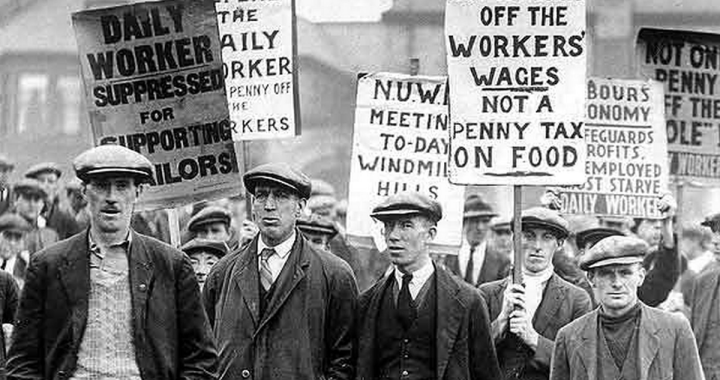
The early 19th century was marked by severe economic hardship. After the Napoleonic Wars ended in 1815, Britain faced high food prices, unemployment, and widespread poverty. Protectionist measures like the Corn Laws kept grain prices artificially high, worsening conditions for working families. At the same time, political representation was deeply unequal: fewer than 3% of Britons could vote, and industrial centres like Manchester had no dedicated MP despite booming populations.
Inspired by Enlightenment ideas and the revolutions in America and France, reformers demanded universal suffrage, annual parliaments, and fairer political representation. Radical figures such as Henry Hunt and William Cobbett became central voices in this movement, while working‑class organisations like the Hampden Clubs mobilised ordinary people to push for change.
The Gathering at St Peter’s Field
On 16 August 1819, an estimated 60,000 people assembled peacefully in Manchester to hear Hunt speak and to demand parliamentary reform. Many travelled from surrounding towns, dressed in their best clothes, carrying banners, and treating the day almost like a festival. Crucially, the crowd was entirely unarmed and orderly.
The meeting was organised by the Manchester Patriotic Union Society, and its sheer size alarmed local magistrates, who feared revolutionary intent. Although the protesters’ behaviour remained peaceful, officials decided to arrest Hunt and other leaders as soon as the speeches began.
The Charge and the Massacre
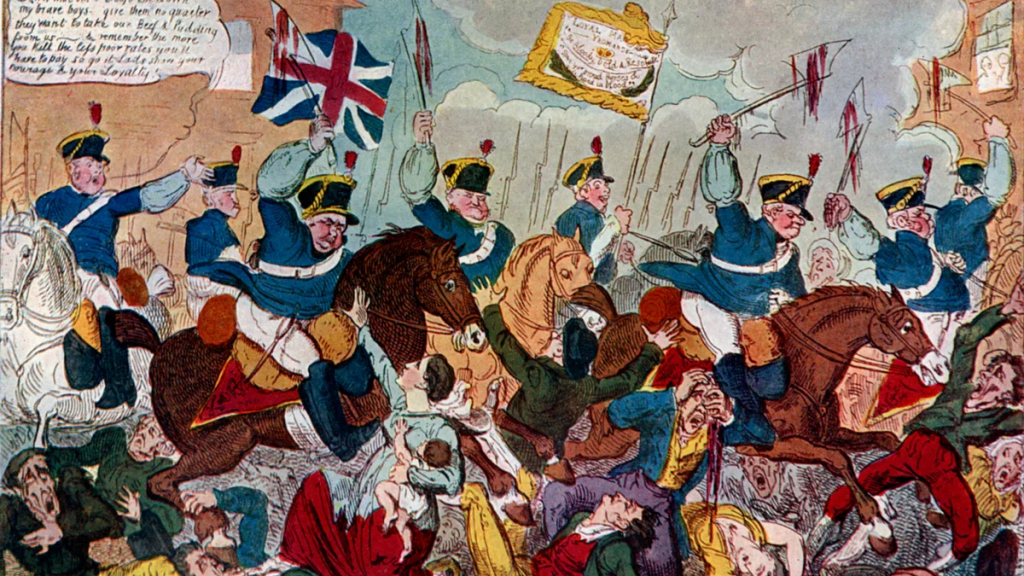
To carry out the arrests, magistrates summoned the Manchester and Salford Yeomanry, a volunteer cavalry force known for its lack of discipline, and later the 15th Hussars, a regular army regiment. The yeomanry charged into the dense crowd with sabres drawn, causing panic and chaos. Within minutes, the peaceful assembly had turned into a scene of terror.
Contemporary accounts vary, but historians generally estimate that around 18 people were killed and several hundred injured; some sources place injuries at around 700. Victims included not only men but also women and children. The brutality shocked the nation. The name “Peterloo” was coined in bitter reference to the Battle of Waterloo, highlighting the irony of British soldiers attacking their own people.
Aftermath and Political Consequences
In the immediate aftermath, reform leaders were arrested and imprisoned, including Henry Hunt, who received a two‑year sentence. The government refused to acknowledge wrongdoing and instead passed the repressive Six Acts, designed to curb radical meetings and publications.
Yet the massacre became a powerful symbol of working‑class political consciousness and state oppression. It galvanised public opinion, inspired radical journalism and art, and intensified demands for reform. Writers like William Cobbett and later historians used Peterloo as evidence of the urgent need for democratic change.
In the longer term, Peterloo helped build momentum toward the Great Reform Act of 1832 and later expansions of the franchise. Though reform was slow and hard‑won, the massacre ensured that the struggle for representation could not be ignored.
Legacy
Today, Peterloo is remembered as a turning point in British democracy – a moment when ordinary people peacefully demanded their rights and were met with violence. Its legacy lives on in campaigns for political representation, civil liberties, and the recognition of working‑class history. Museums, memorials, and annual commemorations continue to honour those who stood at St Peter’s Field in 1819, demanding a voice in their own government.